
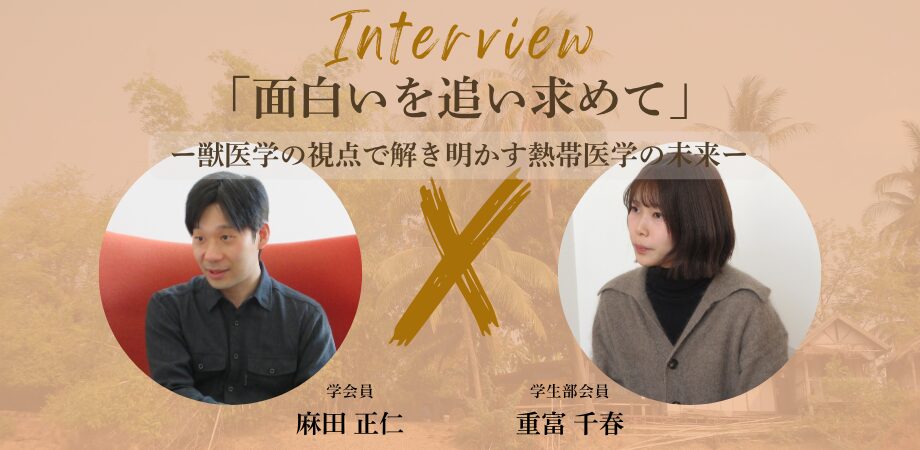
Career Origins and a Passion for Research: Fascinated by Parasites and Immunity
Shigetomi:
Could you start by telling us about your career path to date?
Asada:
I originally studied veterinary medicine at the Faculty of Agriculture, University of Tokyo, where I focused on research related to Leishmania and malaria. Upon graduation, Dr. Yasuyuki Goto (now a Professor of Applied Immunology at the University of Tokyo; https://tjstm.jp/en/tropical-medicine/1694/), who was my senior, introduced me to the National Research Center for Protozoan Diseases at Obihiro University of Agriculture and Veterinary Medicine. There, I began researching Babesia parasites under the guidance of Dr. Shin-ichiro Kawazu. This work led me to conduct field research abroad, including in the Philippines.
*Babesia parasites: Tick-borne protozoa relatively closely related to malaria parasites. They cause babesiosis in both animals and humans.
One of my collaborative research partners in Japan was the laboratory of Dr. Osamu Kaneko at the Institute of Tropical Medicine (NEKKEN), Nagasaki University. In 2012, at Dr. Kaneko’s invitation, I took a position as an Assistant Professor in the “Program for Nurturing Global Leaders in Tropical and Emerging Infectious Diseases” (a Doctoral Education Leading Program) at Nagasaki University. During my six and a half years there, while continuing my malaria research, I also began studying cerebral babesiosis and artiodactyl malaria*, which are closely related to malaria. In 2019, I returned to Obihiro University of Agriculture and Veterinary Medicine as an Associate Professor, leading to my current role.
*Artiodactyl malaria: An infectious disease caused by malaria parasites that infect even-toed ungulates (mammals with an even number of toes, such as two or four).
Shigetomi:
What kind of research are you currently working on?
Asada:
My research focuses on elucidating the mechanisms of erythrocytic (red blood cell) infection in Babesia and malaria, with the goal of developing new preventive and therapeutic methods. Babesiosis is one of the most critical protozoan diseases in livestock, while malaria remains one of the most significant for humans. With a comparative perspective between these two parasites, I am conducting basic research primarily from the field of veterinary medicine to contribute to the control of both diseases.
Shigetomi:
So, you are tackling diseases that are considered “most critical” in both the animal and human sectors.
Shigetomi:
What was the motivation or background that led you to your current work?
Asada:
I have always had a strong interest in immunology. During my student days, I attended a lecture by Dr. Yoshitsugu Matsumoto*, which sparked my fascination with parasites. This led me to join the Laboratory of Applied Immunology at the University of Tokyo, where research on parasite immunology was being conducted. I was particularly interested in Leishmania. These parasites invade macrophages—cells that are supposed to eliminate pathogens—and actually multiply inside them. The mystery of “why they can thrive in the very place meant to destroy them” became a major motivation for my research.
*Dr. Yoshitsugu Matsumoto: Professor Emeritus, University of Tokyo. https://tjstm.jp/en/tropical-medicine/1694/
Shigetomi:
It seems that your lectures and the mentors you met during your student years have directly shaped your current research. Are there any other individuals who have influenced your career?
Asada:
Although I was not his direct student, I have been strongly influenced by Dr. Masamichi Aikawa*. Dr. Aikawa conducted comparative studies between babesiosis and malaria, and his work serves as an essential foundation for my current research philosophy.
*Former Professor at Case Western Reserve University (USA), Tokai University, and Visiting Professor at the University of Tokyo. Deceased in 2004.
Shigetomi:
When did you decide to pursue a career in research? Did you ever hesitate between research and clinical practice as a veterinarian?
Asada:
Actually, I never really considered becoming a clinician. Even as a student, I always knew I wanted to be a researcher.
Shigetomi:
I see. Could you tell us when and why you decided to incorporate cutting-edge technologies, such as genetic engineering, into your research, and what you find exciting about them?
Asada:
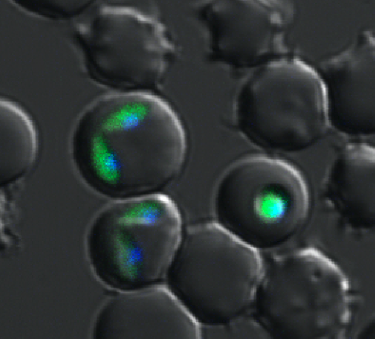
When I was a graduate student, I saw fluorescent Leishmania parasites for the first time and became determined to create something similar myself. At that time, my laboratory did not have the specific technical expertise, so I had to learn through a lot of trial and error. In that process, I discovered that Dr. Goto had acquired those techniques under Dr. Kawazu during his own student days. Later, as I mentioned in my career overview, I was fortunate to have the opportunity to conduct research on developing genetic engineering techniques under Dr. Kawazu at the National Research Center for Protozoan Diseases. This eventually led to the successful creation of fluorescent Babesia parasites.

Water Buffalo Malaria and Unexplored Protozoa: Intellectual Curiosity Filling a 100-Year Gap
Shigetomi:
Could you tell us what led to the discovery of previously unknown facts in your research on water buffalo in Thailand?
Asada:
It actually started with the inquisitive mind of Dr. Osamu Kaneko, who was the head of the laboratory I belonged to at the time—you could almost call it his “intellectual hobby.” While delving into old literature, Dr. Kaneko came across descriptions of artiodactyl malaria and had been quietly developing a research concept for many years. Since I had a background in veterinary medicine, I raised my hand and said, “I can handle that field research,” and that is how the project officially took off.
Shigetomi:
So, the convergence of Dr. Kaneko’s long-held vision and your veterinary expertise became a major turning point for the research.
Shigetomi:
What do you find most fascinating about focusing on “livestock malaria parasites” and “Babesia parasites” as research subjects?
Asada:
It is believed that the ancestors of malaria parasites likely infected birds or reptiles. Exploring the evolutionary process of how they adapted to mammals and eventually expanded their host range to humans is a research endeavor of immense value. Furthermore, I firmly believe that deepening our understanding of these peripheral areas will ultimately contribute to human health and medical advancement.
Shigetomi:
The conviction that tracing the evolution of protozoa contributes to human health truly highlights the fundamental value of basic research.
Shigetomi:
What do you find most rewarding or exciting about your current work?
Asada:
It is purely enjoyable to be able to use my own hands to shed light on areas that were reported in the past but had been left untouched for nearly 100 years. It might be considered a niche field of research, but the fact that it allows us to understand the evolution of malaria parasites and their strategies for host adaptation is what makes it so fascinating. That discovery is the driving force behind my research.
The “Two-Sword” Approach: Balancing the Lab and the Field to Maintain a Broad Perspective
Shigetomi:
What do you find most rewarding about conducting both laboratory research and overseas field studies?
Asada:
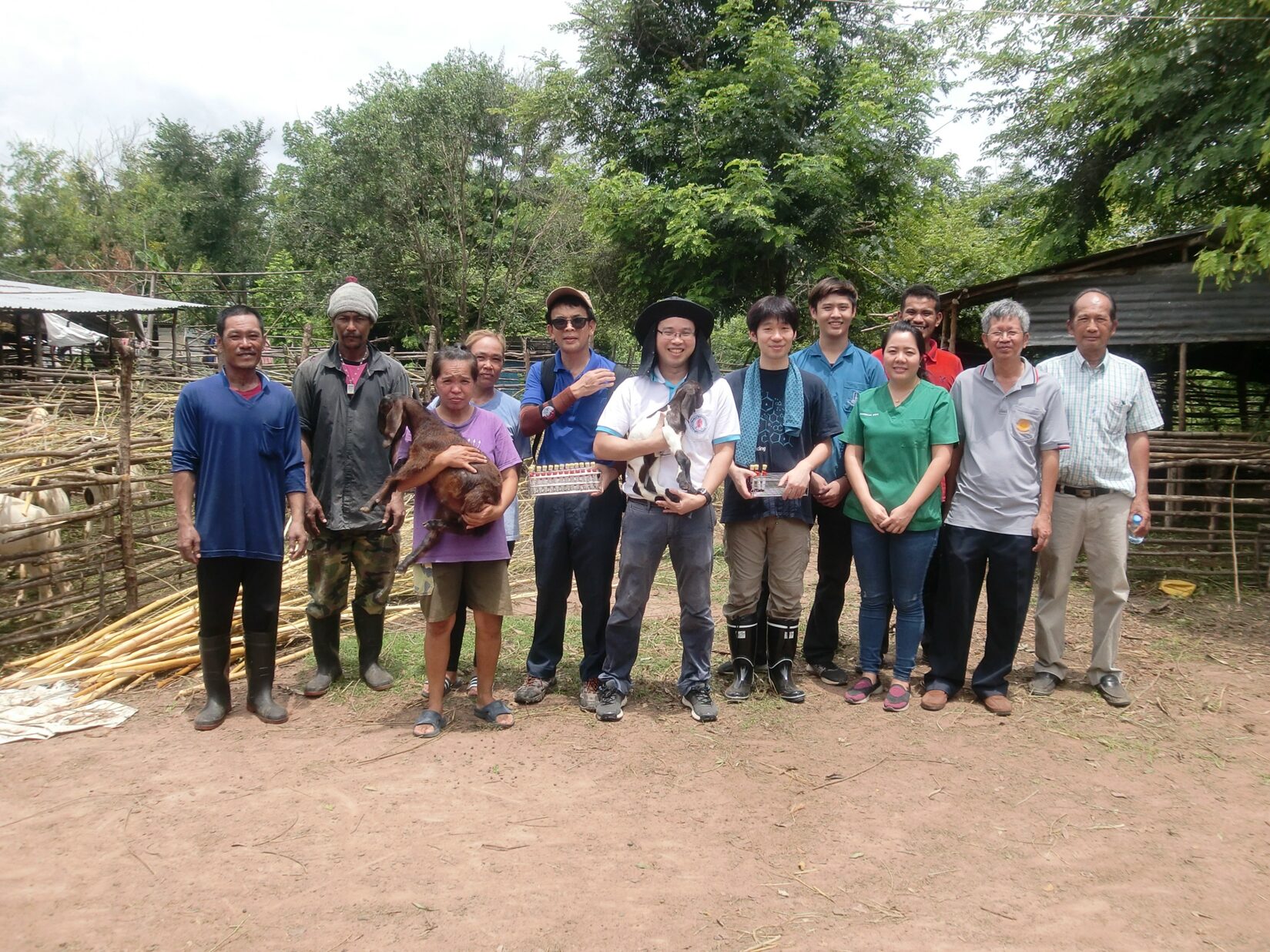
To be honest, I simply love the act of going abroad. I see field research as a part of the broader experience of seeing new things and gaining diverse perspectives. On a more serious note, if you only stay in the lab, you risk seeing parasites solely within the confines of a flask. I believe it is essential to keep the actual conditions of the field in mind so that our discussions and the development of drugs or vaccines do not become detached from the local environment and reality.
Shigetomi:
So, engaging in both types of research allows you to maintain a broader perspective.
Asada:
Exactly. I conduct my research with the constant goal of ensuring it doesn’t become one-sided or narrow.
The Role of Veterinary Perspectives and Japan’s Contribution to Tropical Medicine
Shigetomi:
Are there moments when you feel your veterinary background is particularly useful in the field of tropical medicine?
Asada:
The ability to perform sampling directly from animals and then carry that through to research is a major strength. Additionally, because veterinary education covers a comprehensive range of subjects—including physiology, anatomy, and laboratory animal science—I find that my skills are often highly valued as “immediately effective” in the field. Being able to collect blood samples from diverse animals like cattle, goats, and dogs, communicating smoothly with local veterinarians and farmers, and working with a solid understanding of livestock hygiene are all significant advantages.
Shigetomi:
So, your strength lies in being able to handle everything from sampling to lab work consistently. What do you see as the significance of Japan’s contribution to tropical medicine?
Asada:
Japan is a country with the unique successful experience of having eradicated tropical diseases like malaria and rabies. While being an island nation was a significant environmental factor, there is great meaning in sharing the knowledge and techniques cultivated during that eradication process with countries that are still suffering from these diseases today.
Shigetomi:
The ability to give back to modern tropical disease control by drawing on a history of eradication is indeed a unique Japanese strength.
A Life’s Work: Driven by Curiosity and Action
Shigetomi:
What are your future goals, dreams, or projects you’d like to tackle?
Asada:
Compared to human malaria parasites, there is still so much we don’t understand about peripheral organisms like Babesia and Theileria—such as what they truly are as biological entities. Where do they multiply in the host? How exactly are they transmitted? I want to make it my life’s work to solve these detailed mysteries through molecular biology. And of course, whenever I find an interesting field site, I plan to pack my bags and go.
*Theileria parasites: These cause diseases such as East Coast fever and tropical theileriosis in artiodactyls. Cattle infected with these diseases have a very high mortality rate.
Shigetomi:
Does that mean maintaining a sense of “lightness on your feet” (mobility)?
Asada:
Yes. Many members of the Japanese Society of Tropical Medicine (JSTM) share that spirit, and I want to continue following their example.
Shigetomi:
Finally, do you have any advice or comments for the JSTM Student Section?
Asada:
I feel that those already involved in the Student Section are very passionate and driven. I think the next important step is to engage and welcome those who haven’t yet been exposed to this field. Please cherish and nurture your curiosity and that “I want to try this” spirit. We in the older generation are committed to building a system that fully supports those ambitions.
Shigetomi:
I have learned so much today. Thank you very much for your time.
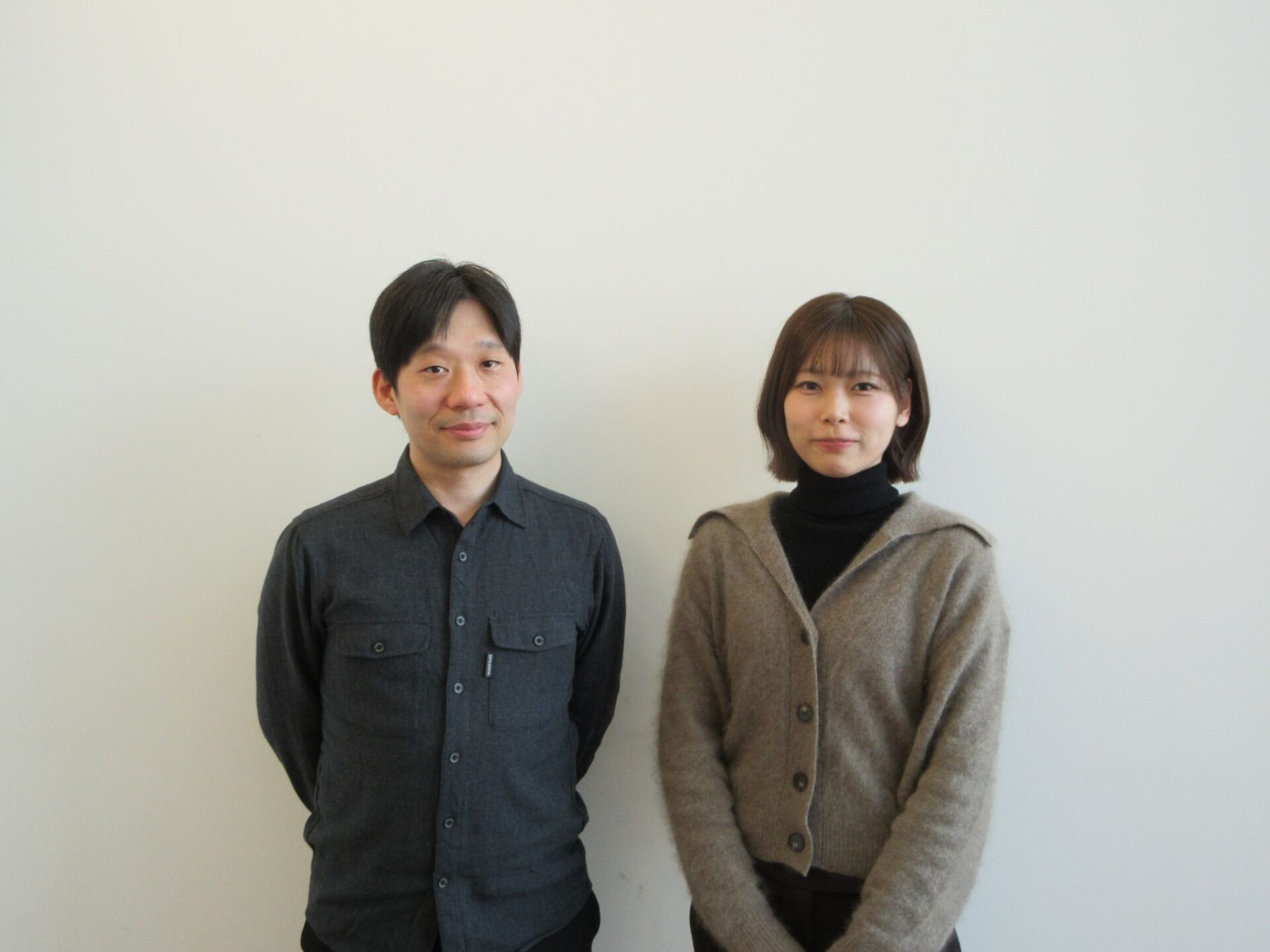
Profile of Interview Participants
Dr. Masahito Asada
Associate Professor at the Unit of Global Infectious Diseases, National Research Center for Protozoan Diseases, Obihiro University of Agriculture and Veterinary Medicine. Originally from Hyogo Prefecture. After obtaining his PhD (Veterinary Medicine) from the University of Tokyo, he served as a Postdoctoral Fellow at the National Research Center for Protozoan Diseases and as an Assistant Professor at the Institute of Tropical Medicine (NEKKEN), Nagasaki University, before assuming his current position. His hobbies include reading, visiting hot springs, and exploring local cuisine.
Chiharu Shigetomi
First-year student in the Public Health Nurse Training Course, Graduate School of Biomedical Sciences, Nagasaki University. Originally from Fukuoka Prefecture. Graduated from the School of Health Sciences (Nursing Course), Nagasaki University, in 2025. She aims to work in the field of international health as a public health nurse in the future. Her areas of interest include Neglected Tropical Diseases (NTDs) and WASH (Water, Sanitation, and Hygiene). Her hobby is visiting art museums.